UK Retail Betting Sector Confronts Declining Shop Numbers and Growing Local Regulatory Pushback
Written by Willa Schulz · Aug 28, 2026

UK Retail Betting Sector Confronts Declining Shop Numbers and Growing Local Regulatory Pushback
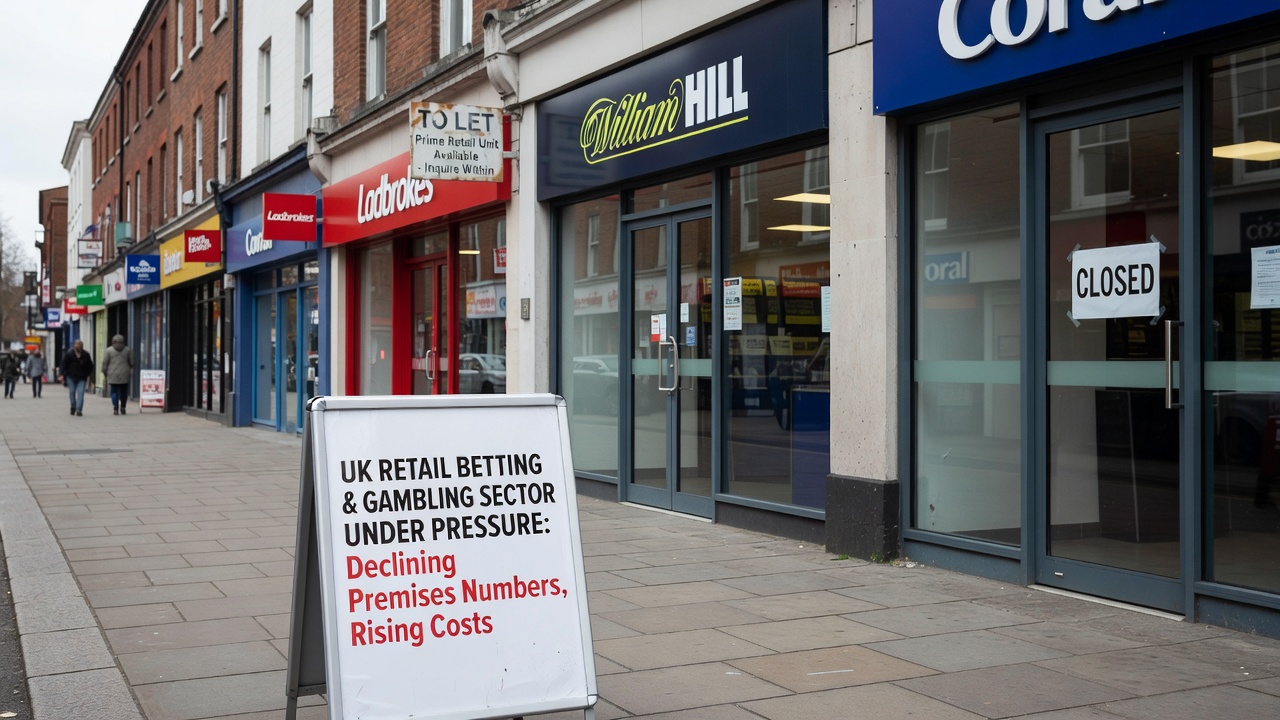
National betting shop numbers have fallen sharply in recent periods, and operators including Betfred and Evoke have announced further closures while some local councils such as Brent record net drops in licensed premises; at the same time per-shop revenues have continued to climb even as overall site counts shrink, and a deteriorating public and political reputation now raises the possibility that local political decisions could override central policy on new openings.
Data on licensed premises shows consistent year-on-year reductions across the UK retail sector, with major chains trimming their portfolios in response to sustained commercial pressures; Betfred has confirmed additional site closures while Evoke has followed a similar pattern of rationalisation, and these moves align with broader figures that track a contraction in the total number of betting shops nationwide.
Local Council Trends Highlight Uneven Distribution of Closures
Brent council has reported a net reduction in licensed betting premises within its jurisdiction, and similar patterns appear in other local authority areas where operators have chosen not to renew leases or have actively downsized; the uneven geography of these closures means certain high streets experience rapid change while others retain more stable provision, yet the overall direction remains one of contraction.
Statistics released through official channels indicate that the pace of decline has accelerated beyond earlier projections, and industry observers point to a combination of rising operational costs, shifting consumer habits and tighter compliance requirements as contributing factors that compound the effect of each successive round of closures.
Revenues per Remaining Shop Continue Upward Trend
Despite the reduction in total premises, revenues generated by surviving shops have increased on a per-site basis, and this rise reflects higher average customer spend at locations that remain open; the concentration of activity into fewer outlets produces stronger individual performance metrics even while aggregate sector figures show pressure.
Quarterly and annual statistics on licensed premises and gross gaming revenue demonstrate that the surviving retail estate delivers improved returns per shop, and these figures come from data referenced in industry reporting with official statistics available via gamblingcommission.gov.uk; the pattern suggests operators are extracting greater value from each retained location while simultaneously managing a smaller physical footprint.
Reputation Challenges Open Door to Stronger Local Political Influence
Public and political sentiment toward the retail betting sector has worsened over successive years, and this shift creates conditions in which local authorities may exercise greater discretion when considering new applications or licence renewals; calls have grown to remove or amend the “aim to permit” rule that currently guides licensing decisions and limits the scope for restrictive local policies.
Campaigners and some councillors argue that scrapping the existing presumption in favour of permitting would allow communities to impose tighter controls on new betting sites, and the momentum behind these arguments has increased in line with broader concerns about gambling harm and high-street vitality; several local authorities have already signalled willingness to test the boundaries of current national guidance if the rule remains unchanged.
Policy discussions at both national and local levels now routinely reference the reputational difficulties facing the sector, and evidence presented to licensing committees frequently highlights cumulative impact assessments that weigh existing provision against proposed new outlets; these assessments can tip decisions even when national policy continues to favour a permissive stance.
Industry Responses and Operational Adjustments
Operators have responded to the dual pressures of fewer sites and higher per-shop returns by accelerating digital migration strategies and reviewing their remaining retail portfolios on a location-by-location basis; announcements from Betfred and Evoke illustrate the scale of adjustment, while smaller chains and independent operators face similar calculations about viability.
Local licensing data from Brent and comparable authorities shows that applications for new premises have become less frequent, and where applications do proceed they encounter more detailed scrutiny; the combination of reduced applications and increased objections produces a slower pipeline for any future expansion of the physical retail network.
Conclusion
The convergence of falling national shop numbers, rising revenues at surviving locations, and a political environment more receptive to local restrictions creates a distinct phase for the UK retail betting sector; developments through mid-2026 continue to reflect these trends, with operators, regulators and local councils each navigating the consequences of sustained contraction alongside concentrated performance gains at remaining sites.